


This text was reviewed by Small Animal Specialist Dr Sonya Wasik BVSc (Hons), BSc (Hons), MANZCVS, Dipl. ECVS, Registered Specialist in Small Animal Surgical procedure at Melbourne Veterinary Orthopaedics. Sonya focuses on the administration of cruciate ligament illness, advanced fracture restore, joint stabilisation, and revision procedures.
In case your canine has out of the blue began limping on a again leg, is struggling to stand up, or got here dwelling lame after working or enjoying, a cruciate ligament harm could also be one of many situations your veterinarian considers.
Usually known as an ACL harm in canines, the situation is extra precisely often called cranial cruciate ligament (CCL) illness. It is among the most typical orthopaedic issues affecting canines and may vary from delicate, intermittent lameness to a whole ligament rupture that considerably impacts a canine’s means to stroll comfortably.
However there’s one thing many canine house owners don’t realise.
In contrast to the sudden sporting ACL accidents generally seen in folks, cruciate ligament issues in canines are sometimes not attributable to one dramatic accident. In lots of circumstances, the ligament has been steadily weakening for weeks or months earlier than the day a canine out of the blue turns into noticeably lame.
That distinction issues, significantly for house owners who blame themselves as a result of their canine turned lame after chasing a ball, leaping from the automotive or just tearing across the yard.
On this information, we take an in-depth have a look at cranial cruciate ligament illness in canines, together with the early indicators house owners can simply miss, why some canines could also be extra vulnerable, how the situation is identified, remedy and surgical choices, the price of cruciate ligament remedy in Australia, restoration after surgical procedure and what house owners can do to help long-term joint well being.
We additionally converse with Dr Sonya Wasik BVSc (Hons), BSc (Hons), MANZCVS, Dipl. ECVS, Registered Specialist in Small Animal Surgical procedure at Melbourne Veterinary Orthopaedics, to assist clarify what is definitely occurring contained in the knee, and what house owners have to know following a cruciate ligament prognosis.
The 30-Second Reply: What Is a Cruciate Ligament Damage in Canine?
The cranial cruciate ligament is a vital ligament that helps stabilise a canine’s knee, often called the stifle joint.
When this ligament turns into broken, partially tears or utterly ruptures, the knee can grow to be unstable. This instability may cause ache, irritation and lameness and will contribute to the event and development of osteoarthritis inside the affected joint.
Some canines out of the blue refuse to place weight on the affected again leg. Others present a lot much less apparent signs, corresponding to an occasional limp, stiffness after resting, sitting in a different way or hesitating earlier than leaping into the automotive.
Though house owners usually affiliate the issue with a specific incident, corresponding to working, slipping or leaping, canine cruciate ligament illness generally includes gradual degeneration of the ligament over time.
Therapy will depend on the person canine and the severity of the situation. Surgical stabilisation is usually really useful for acceptable sufferers, whereas conservative administration could also be thought of in chosen circumstances.
Pet Insurance coverage Australia has seen ACL declare prices exceed $23,000* for max claims, with a mean declare quantity of $400+.
Is an ACL Damage the Similar as a Cruciate Ligament Damage in Canine?
Virtually, however there is a vital terminology distinction.
People have an anterior cruciate ligament (ACL) within the knee. Canine have the equal construction, known as the cranial cruciate ligament (CCL).
For this reason canine house owners generally seek for phrases corresponding to “canine ACL harm”, “torn ACL in canines” or “canine ACL surgical procedure”. Your veterinarian, nonetheless, is extra more likely to confer with the situation as a cranial cruciate ligament harm, CCL rupture or cranial cruciate ligament illness.
The ligament sits inside the canine’s stifle joint and performs a vital position in retaining the knee secure throughout motion and weight-bearing.
When it stops functioning correctly, irregular motion can happen between the tibia (shin bone) and femur (thigh bone). This instability causes irritation and discomfort and may progressively injury different constructions inside the joint.
A kind of constructions is the meniscus, a bit of cartilage that helps take up shock inside the knee. Meniscal injury can happen alongside cruciate ligament illness and will additional contribute to ache and lameness.
Do Canine All of a sudden Tear Their Cruciate Ligament?
That is the place canine cruciate illness turns into significantly attention-grabbing, and the place one of many greatest misconceptions exists.
Image a canine racing after a ball on the park. They flip sharply, yelp, and out of the blue come again holding one again leg off the bottom.
It’s utterly comprehensible for an proprietor to imagine:
“They’ve torn their cruciate chasing that ball.”
However that remaining run could solely be a part of the story.
In response to Dr Wasik, most canine CCL accidents are the tip results of a gradual degenerative course of inside the ligament. Early on, solely a small variety of ligament fibres could also be broken. This may create irritation and soreness with out essentially making the knee clearly unstable.
The canine would possibly limp barely for a day or two after which seem utterly regular once more.
Weeks later, it occurs once more.
Ultimately, as extra fibres grow to be broken and the ligament progressively weakens, a partial or full rupture can happen, and the knee could grow to be sufficiently unstable to trigger way more apparent and chronic lameness.
“Homeowners will usually bear in mind the precise second their canine turned severely lame and a few house owners may be very upset with themselves (eg in the event that they had been the one who threw the ball, or let the canine soar out of the automotive slightly than lifting) as they wrongly assume that one particular occasion has triggered all the drawback,” Dr Wasik’s explains. “In actuality, that is seldom the case because the ligament has possible been degenerating for a interval of weeks to months already.”
This additionally explains why cruciate ligament illness isn’t essentially one thing house owners can forestall just by stopping their canine from working, leaping or enjoying.
For some canines, the ultimate rupture can occur throughout a very peculiar motion, even one thing they’ve safely finished lots of of instances earlier than.
Dr Wasik notes that canines can grow to be considerably lame after actions starting from chasing a ball or boisterous play to one thing as on a regular basis as leaping down from a sofa or mattress. But the underlying adjustments inside the ligament could have begun properly earlier than that second.
What Causes Cruciate Ligament Illness in Canine?
There isn’t one single trigger.
Present understanding of canine CCL illness factors in direction of a multifactorial course of, which means a number of components could contribute to why the ligament degenerates or in the end fails.
These can embrace:
- genetics and breed predisposition
- the person canine’s anatomy and limb conformation
- knee joint geometry
- physique weight and physique situation
- age
- muscle situation
- hormonal components
- the underlying organic well being of the ligament
That is additionally why two seemingly comparable canines can have very totally different experiences. One canine could stay unaffected all through life, whereas one other develops cruciate illness regardless of being energetic, match and in any other case wholesome.
And as soon as instability develops, there may be penalties past the unique ligament.
An unstable knee adjustments the conventional mechanics of the joint. This may perpetuate irritation and ache, contribute to progressive osteoarthritis and probably injury the meniscus.
That makes recognising the early warning indicators significantly necessary. And people indicators aren’t at all times the dramatic, three-legged limp house owners anticipate. In reality, the primary clues that one thing isn’t proper may be surprisingly simple to overlook.
What Are the Early Indicators of Cruciate Ligament Illness in Canine?
Not each cruciate ligament drawback begins with a canine out of the blue refusing to make use of a again leg; a number of the earliest indicators may be remarkably simple to dismiss.
A canine could limp barely after train, seem stiff when getting away from bed or hesitate earlier than leaping into the automotive. After somewhat relaxation, they appear tremendous once more, so it’s pure to imagine they’ve overdone it, pulled a muscle or landed awkwardly.
However when these seemingly minor episodes preserve returning, they deserve consideration.
Dr Wasik says the primary indicators of cranial cruciate ligament illness may be surprisingly delicate, significantly when the ligament is simply partially broken.
Early indicators of a cruciate ligament drawback can embrace:
- An intermittent limp affecting one of many again legs
- Stiffness when first getting up after sleeping or resting
- Limping after train however showing comparatively regular throughout exercise
- Sitting with one or each hind legs positioned out to the aspect slightly than sitting squarely
- Hesitating or turning into reluctant to leap into the automotive or onto furnishings
- Much less enthusiasm for regular walks
- Sitting down or desirous to cease throughout a stroll they’d usually full
- Showing sore or lame after working, enjoying or exercising
- Recurrent episodes of hindlimb lameness that enhance with relaxation earlier than returning
One significantly necessary clue is a sample of lameness that appears to vanish after which comes again.
Within the early levels of CCL illness, some fibres inside the ligament could also be broken whereas sufficient of the ligament stays intact to keep up affordable stability inside the knee. A couple of quieter days could make the irritation and soreness settle, giving the impression that no matter was unsuitable has healed. The underlying ligament drawback, nonetheless, should still be current.
“Some canines develop a really slight, intermittent hindlimb limp that appears to enhance or spontaneously resolve after a number of days of relaxation, solely to return once more at a later time as soon as exercise is reintroduced.”
For this reason repeatedly writing off a gentle back-leg limp as a pulled muscle can probably delay prognosis.
As Dr Wasik explains, persistent or recurrent hindlimb lameness warrants veterinary investigation. Earlier evaluation offers vets a chance to establish what is going on earlier than extended knee instability and secondary joint adjustments develop.
Can a Canine Have a Cruciate Damage and Nonetheless Run and Play?
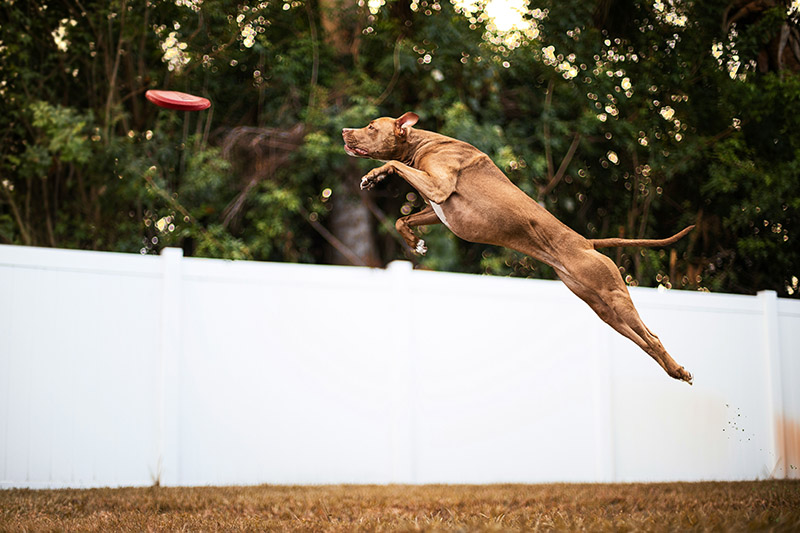
Sure…and this will make recognising a growing drawback significantly troublesome. A canine’s willingness to train isn’t essentially a dependable measure of how snug their knee is. Canine are additionally masters at masking ache, significantly in the event that they need to indulge of their favorite exercise – cue the frisbees and balls.
Some energetic, extremely pushed or working-type canines will proceed to chase balls, run, soar and play regardless of having a painful knee. They could look remarkably regular whereas caught up within the pleasure of an exercise, solely to grow to be noticeably stiff or lame as soon as they cease.
Homeowners can understandably have a look at a canine racing across the park and assume:
“If their knee actually harm, absolutely they wouldn’t be doing that?”
Sadly, that’s not at all times the case.
Dr Wasik says she generally sees this state of affairs in canines with partial CCL ruptures. The canine stays keen about exercise, however afterwards the results grow to be way more obvious via stiffness, soreness or lameness.
“Many energetic/working sort canines is not going to have their drive to be energetic/work or chase after balls of different canines hampered by their sore knee, and can appear to run, soar or play as regular, however they may then pay for it afterwards by often being fairly lame, or stiff/sore as soon as the exercise stops.”
So slightly than wanting solely at what your canine can bodily do, take note of how they transfer and behave afterwards. A recurring post-exercise limp is value mentioning to your veterinarian even when your canine seems desirous to go once more the next day.
Why Is My Canine Sitting With One Again Leg Out to the Aspect?
How your canine sits can even present a clue that one thing is uncomfortable. A cushty canine will usually sit comparatively squarely, with their hindquarters beneath them. Canine experiencing knee discomfort could as an alternative place one hind leg out to the aspect, avoiding full flexion of the affected joint.
This doesn’t routinely imply your canine has a cruciate ligament harm. Many components may cause an altered sitting place. Nonetheless, a brand new or persistent change in the way in which your canine sits, significantly when mixed with limping, stiffness or reluctance to leap, is helpful data to present your veterinarian.
Typically essentially the most invaluable clues aren’t dramatic indicators of ache. They’re merely adjustments from what’s regular in your canine.
What Does a Full Cruciate Ligament Rupture Look Like?
As cruciate illness progresses, the indicators could grow to be way more apparent. A canine that beforehand skilled occasional delicate limping could out of the blue develop important lameness and battle to place regular weight via the affected leg.
Relying on the person canine and severity of the issue, house owners could discover:
- Sudden important hindlimb lameness
- Holding the affected again leg off the bottom
- Issue getting up or shifting comfortably
- Lowered willingness to stroll
- Ache or apparent discomfort
- A considerable deterioration following train
- Lack of muscle from the affected hind leg over time
Extreme mobility issues warrant veterinary consideration, whereas sudden important lameness mustn’t merely be assumed to be a cruciate harm; fractures, dislocations and different painful situations may cause comparable indicators.
When Ought to I Take My Limping Canine to the Vet?
A canine that out of the blue develops extreme lameness, seems to be in important ache or can’t comfortably use a limb must be assessed promptly. However house owners shouldn’t essentially look ahead to signs to grow to be extreme.
One of the helpful messages from Dr Wasik’s recommendation is that recurrent minor lameness issues too.
In case your canine develops a back-leg limp that retains disappearing and returning, turns into repeatedly stiff after train, adjustments the way in which they sit or begins hesitating earlier than actions they beforehand carried out comfortably, prepare a veterinary examination.
Conserving a easy document will also be helpful. Be aware when the lameness happens, how lengthy it lasts and whether or not specific actions appear to make it worse. A brief video of your canine strolling or displaying the irregular motion at dwelling might also assist exhibit what you’ve been seeing in the event that they occur to maneuver usually as soon as they attain the clinic.
The objective isn’t to diagnose a cruciate harm your self. It’s to recognise {that a} recurring change in your canine’s motion deserves investigation. As a result of as soon as cruciate illness is suspected, the following query is often:
Why did this occur to my canine — and are some canines extra in danger than others?
Which Canine Are Most at Danger of Cruciate Ligament Illness?
Cranial cruciate ligament illness can have an effect on canines of any breed or measurement, however some breeds seem extra vulnerable than others.
In her personal orthopaedic caseload, Dr Sonya Wasik says Labrador Retrievers, Golden Retrievers and Staffordshire Bull Terriers are among the many breeds she generally treats for cruciate ligament illness. She additionally highlights Newfoundlands, which may current at a younger age and will typically have each knees affected.
Breed alone doesn’t decide whether or not a canine will develop CCL illness. Genetics are thought to play an necessary position, whereas variations in limb conformation and knee geometry can even affect the forces positioned on the ligament.
As Dr Wasik explains:
“There isn’t a single purpose; genetics seem to play an necessary position, whereas variations in limb conformation and particular person stifle geometry, for instance, canines which have a steep or extreme tibial plateau angle, can affect the forces positioned on the ligament.”
Curiously, she notes that Greyhounds and different Sighthounds seem like hardly ever affected in contrast with a number of the breeds she generally sees.
Can Small Canine Get Cruciate Ligament Accidents?
Sure. Cruciate ligament illness isn’t restricted to giant canines.
Dr Wasik additionally performs cruciate surgical procedure in small breeds and notes that, inside the small canines she personally sees, round half have concurrent medial patellar luxation, the place the kneecap strikes out of its regular place.
When each situations are current, the patellar luxation could must be addressed as a part of the canine’s remedy plan.
“I do appear to undertake numerous cruciate ligament surgical procedures in small breed canines too; in all probability 50% of circumstances that I personally see inside this inhabitants have concurrent medial patellar luxation, which must be addressed on the identical time.”
Can a Canine Rupture the Cruciate Ligament in Each Knees?
Sure. As soon as a canine develops CCL illness in a single knee, there’s a important threat that the alternative knee could finally be affected.
Some canines have issues in each knees on the identical time, whereas others could have apparent lameness in a single leg though adjustments are additionally occurring within the different.
“In lots of canines, each ligaments are present process the identical underlying degenerative course of on the identical time, however maybe at totally different charges.”
This doesn’t imply each canine identified with a cruciate drawback will finally rupture each ligaments. Nonetheless, house owners and veterinarians ought to proceed to observe the well being and mobility of the alternative knee.
How Is a Cruciate Ligament Damage Recognized in Canine?
Analysis often begins with a veterinary examination of the canine’s gait, knee and total hindlimb perform. Veterinarians can assess the stifle for irregular motion or instability related to cruciate ligament insufficiency. Radiographs (X-rays) are additionally necessary for assessing the joint and its conformation and could also be required for surgical planning.
In some circumstances, an examination below anaesthesia (EUA) may also help establish knee instability that was troublesome to detect whereas the canine was awake.
“Appropriately positioned radiographs are necessary for diagnostic functions/evaluation of conformation, in addition to pre-surgical planning, templating and implant sizing,” Dr Wasik says. “Concurrent examination below anaesthesia (EUA) can be essential to find out degree of stability and will detect delicate instability which wasn’t so apparent on the acutely aware examination.”
Different causes of hindlimb lameness can produce comparable signs, so veterinary evaluation issues slightly than assuming a back-leg limp routinely means a cruciate harm.
As soon as CCL illness has been identified, the following choice is how finest to handle the affected knee.
And regardless of what house owners could discover after a frantic Google search, no single cruciate remedy or surgical process is true for each canine.
How Are Cruciate Ligament Accidents Handled in Canine?
As soon as a veterinarian diagnoses cranial cruciate ligament illness, remedy will depend on the person canine.
No single operation or remedy plan is routinely proper for each affected person. A veterinarian or surgeon could take into account the canine’s measurement, age, exercise degree, knee stability, conformation and some other medical or orthopaedic situations earlier than recommending an strategy. Therapy could contain conservative administration in chosen circumstances or surgical stabilisation of the knee.
“There is no such thing as a single operation that’s routinely finest for each canine; the truth that a number of totally different surgical strategies exist to handle this situation confirms this.”
Can a Canine Recuperate From a Cruciate Ligament Damage With out Surgical procedure?
Conservative, or non-surgical, administration could also be thought of for some canines and must be mentioned together with your veterinarian.
Whether or not it’s acceptable will depend on the person affected person and the character of their cruciate illness. Administration could contain managed exercise, weight administration, ache aid or anti-inflammatory medicine when prescribed, and rehabilitation below veterinary steering.
Nonetheless, when the cruciate ligament is not functioning adequately, the knee can stay mechanically unstable. For a lot of canines, surgical procedure could subsequently be really useful to stabilise the joint and help a return to snug perform.
What Surgical procedure Is Used for Cruciate Ligament Accidents in Canine?
A number of surgical strategies can be found, which is another excuse house owners could encounter very totally different terminology when researching cruciate remedy.
For a lot of medium and enormous canines, Dr Wasik says osteotomy procedures corresponding to a tibial plateau levelling osteotomy (TPLO) can present predictable outcomes. Different procedures, together with extracapsular stabilisation, could swimsuit chosen sufferers, together with some smaller or much less energetic canines.
What Is TPLO Surgical procedure?
TPLO is among the generally carried out surgical procedures used to deal with cranial cruciate ligament illness in canines.
One necessary factor to grasp is that TPLO doesn’t merely sew the broken cruciate ligament again collectively. As a substitute, the process adjustments the knee’s biomechanics.
Throughout TPLO surgical procedure, the surgeon makes a managed reduce within the higher portion of the tibia and alters the angle of the tibial plateau. The bone is then stabilised in its new place utilizing a specialised plate and screws.
This adjustments the forces performing via the knee throughout weight-bearing, permitting the joint to perform extra successfully regardless of the broken cruciate ligament.
“Procedures like TPLO are biomechanical corrections, which serve to functionally stabilise the knee throughout weight-bearing within the absence of a cruciate ligament.”
How Does a Vet Determine Which Cruciate Surgical procedure Is Finest?
Breed or physique weight alone doesn’t decide essentially the most acceptable process. Vets mix radiographs, examination findings, and surgical planning with components such because the canine’s life-style, anatomy, and diploma of instability.
The surgeon’s expertise and coaching are additionally related.
For house owners, this implies two canines with the identical prognosis could not essentially obtain the identical remedy advice.
The intention shouldn’t be merely to make the canine able to strolling once more. The longer-term objective is to revive snug perform acceptable to that particular person canine, whether or not that’s returning to work or agility, working on the park, or just having fun with regular life.
As a result of cruciate surgical procedure can contain specialised imaging, tools, implants, and appreciable surgical planning, remedy is usually a important veterinary expense.
So, how a lot can treating a cruciate ligament harm really value?
How A lot Does Cruciate Ligament Surgical procedure Value for Canine in Australia?
The price of treating a cruciate ligament harm can differ significantly between canines as a result of “cruciate surgical procedure” isn’t one single process.
The canine’s measurement, surgical method, diploma of knee instability and whether or not there’s extra injury — corresponding to a meniscal harm — can all affect the ultimate value. Different orthopaedic situations might also must be addressed.
Therapy prices can embrace diagnostic imaging, anaesthesia, specialised surgical tools and implants, hospitalisation, medicines and follow-up radiographs.
“Components such because the canine’s measurement and age, the diploma of instability, whether or not the meniscus is broken, the surgical method chosen and the presence of different orthopaedic issues, corresponding to medial patellar luxation, angular deformities and so on., all affect remedy.”
What Do Cruciate Ligament Claims Value?
Pet Insurance coverage Australia claims information offers an perception into simply how expensive cruciate ligament issues can grow to be.
In response to PetSure, Pet Insurance coverage Australia’s underwriter, over the previous 24 months:
- Cruciate ligament trauma: the typical declare was $556, whereas the very best declare reached $26,751.*
- Cruciate ligament illness: the typical declare was $419, with the very best declare reaching $19,012.*
Whereas common claims could appear modest, the very best claims present how prices can escalate in advanced circumstances.
These figures symbolize pet insurance coverage claims, not the overall value of remedy. The quantity a person proprietor could face will depend on their canine’s situation, the remedy required, and their veterinary supplier.
*PetSure claims information for Pet Insurance coverage Australia, earlier 24 months.
Why Can TPLO Surgical procedure Be Costly?
TPLO is a technically advanced orthopaedic process that requires specialised tools, surgical experience, and implants designed to stabilise the bone after the tibia has been repositioned.
Dr Wasik describes cruciate stabilisation procedures as “tools heavy”, requiring appreciable surgical stock alongside acceptable coaching and experience.
The objective extends past merely getting a canine again onto 4 legs. Profitable remedy goals to revive snug, purposeful motion acceptable to the person canine.
However surgical procedure itself is simply a part of the method.
What occurs throughout the next eight to 12 weeks may be simply as necessary to a canine’s restoration.
What Is Restoration Like After Cruciate Ligament Surgical procedure?
Restoration from cruciate ligament surgical procedure is gradual, even when a canine seems to really feel dramatically higher quickly after the process.
Some canines start utilizing the operated leg on the day of surgical procedure or the next day, whereas others could take a number of days. By across the two-week postoperative examine, Dr Wasik says most canines are utilizing the operated leg to some extent.
The problem is that feeling higher doesn’t imply the surgical web site has totally healed.
“This may really create one of many greatest challenges of post-surgical restoration and rehabilitation: the canine usually feels higher earlier than the surgical procedure web site has utterly healed and may really feel tempted to overdo it bodily.”
In the course of the preliminary restoration interval, canines typically want rigorously restricted exercise. Dr Wasik recommends retaining canines rested and confined to a small, safe space or crate after they can’t be instantly supervised in the course of the first eight weeks.
Train is often restricted to managed, brief leash walks, with working, leaping, stairs, tough play and unrestricted exercise averted whereas therapeutic takes place.
For procedures involving an osteotomy, corresponding to TPLO, follow-up radiographs may also help assess bone therapeutic earlier than steadily growing exercise.
How Lengthy Does Restoration From Cruciate Surgical procedure Take?
Relying on the process and particular person canine, rehabilitation generally takes round eight to 12 weeks, though rebuilding misplaced muscle power can take a number of months.
One of many greatest errors house owners could make is permitting an excessive amount of exercise too quickly.
“A canine that out of the blue feels dramatically higher with a secure knee joint at 4 weeks doesn’t essentially have a completely healed tibia by that point, and catastrophic issues (corresponding to implant failure, fracture of the tibia/tibial tuberosity/patella) can happen.”
Following the rehabilitation plan your veterinary group offers is necessary, even when your canine appears able to do way more.
Can Cruciate Ligament Illness Be Prevented?
There is no such thing as a assured strategy to forestall CCL illness, significantly in canines with an underlying predisposition.
Nonetheless, sustaining a wholesome physique weight and good muscle situation is one sensible space house owners can affect.
Extra weight provides load to weight-bearing joints and may make motion tougher for canines already coping with an unstable or arthritic knee. Conserving canines lean can be invaluable throughout rehabilitation.
Homeowners can even tackle recurring mobility adjustments slightly than ready for main deterioration. In case your canine repeatedly develops unexplained hindlimb lameness, converse together with your veterinarian.
A cruciate prognosis can sound daunting, significantly when surgical procedure is really useful, however the outlook for appropriately handled canines may be very constructive.
As Dr Wasik explains:
“The overwhelming majority of appropriately handled canines can return to a superb high quality of life.”
With an acceptable remedy plan, good postoperative care and a dedicated restoration interval, many canines can return to snug, energetic lives.
Often Requested Questions About Cruciate Ligament Accidents in Canine
Can a canine stroll with a torn cruciate ligament?
Sure, some canines can nonetheless stroll, and even run or play, with a broken or partially torn cranial cruciate ligament. Others could develop important lameness or keep away from placing weight on the affected leg. A canine’s willingness to make use of the leg doesn’t essentially point out how severe the issue is, so a veterinarian ought to assess persistent or recurring hindlimb lameness.
Does a torn cruciate ligament in a canine at all times want surgical procedure?
Not at all times. Conservative administration could also be thought of for chosen canines, whereas surgical procedure could also be really useful when the knee is unstable, or the situation considerably impacts consolation and performance. The very best strategy will depend on components together with the canine’s measurement, age, exercise degree, anatomy and diploma of joint instability.
What occurs if a canine’s cruciate ligament harm is left untreated?
An incompetent cranial cruciate ligament can depart the knee mechanically unstable. In response to Dr Wasik, this instability can perpetuate ache and irritation and contribute to progressive osteoarthritis. The medial meniscus inside the knee can even grow to be broken. Homeowners ought to focus on remedy choices and sure outcomes with their veterinarian.
How lengthy does it take a canine to get well from cruciate ligament surgical procedure?
Restoration varies by process and particular person canine, however Dr Wasik says rehabilitation generally lasts about eight to 12 weeks. Rebuilding misplaced muscle mass and power could take a number of months. Improve exercise solely in keeping with the postoperative plan offered by the canine’s veterinary group.
Can a canine tear the cruciate ligament within the different leg?
Sure. Canine identified with CCL illness in a single knee can even develop issues within the reverse knee. Dr Wasik explains that, in lots of canines, each ligaments could also be present process the identical underlying degenerative course of on the identical time however at totally different charges.
Can cruciate ligament accidents in canines be prevented?
There is no such thing as a assured strategy to forestall cranial cruciate ligament illness, significantly when a canine is genetically predisposed. Sustaining a wholesome physique weight and good muscle situation may also help cut back pointless load on the joints. Additionally examine recurring hindlimb lameness slightly than repeatedly assuming it’s a minor pressure.
This text offers basic data solely and isn’t an alternative choice to veterinary recommendation. In case your canine is limping, experiencing ache or exhibiting adjustments in mobility, converse together with your veterinarian.

Put up Views: 6

Nadia Crighton is a famend and completed skilled within the fields of Journalism, Public Relations, and Writing, with an intensive profession spanning over 25 years, 20 of which have been devoted to selling the well being and well-being of pets.

