


Avi Zobel is a wildlife advocate, licensed snake catcher, and the founding father of Reptiles of Israel, additionally recognized by its Hebrew identify, “Shomrim Al Zochalei Ha’aretz,” or “Guardians of Israel’s Reptiles.” His work facilities on altering the best way individuals understand snakes, lizards, turtles, and different reptiles. By way of training, public outreach, wildlife rescue and relocation, Zobel has labored to advertise coexistence between individuals and reptiles. His group offers details about Israel’s native reptiles and encourages individuals to guard slightly than destroy animals they encounter. REPTILES Journal Editor John Virata interviews him about his group and herping in Israel.
Reptiles Journal: What impressed you to start out Reptiles of Israel, and what did you see occurring with Israel’s reptiles that made you’re feeling a company like this was wanted?
Avi Zobel: My reference to reptiles started lengthy earlier than I based Reptiles of Israel. I grew to become desirous about reptiles as a young person, and in 1991 I volunteered on the Zoological Institute of Tel Aviv College. Since then, I’ve collected greater than 30 years of expertise, primarily by way of fieldwork, commentary, skilled studying and dealing with reptiles. Over time, I noticed that Israel has sturdy governmental our bodies, environmental organizations and conservation organizations doing essential work. On the similar time, I felt that reptiles weren’t receiving sufficient centered public consideration and training.
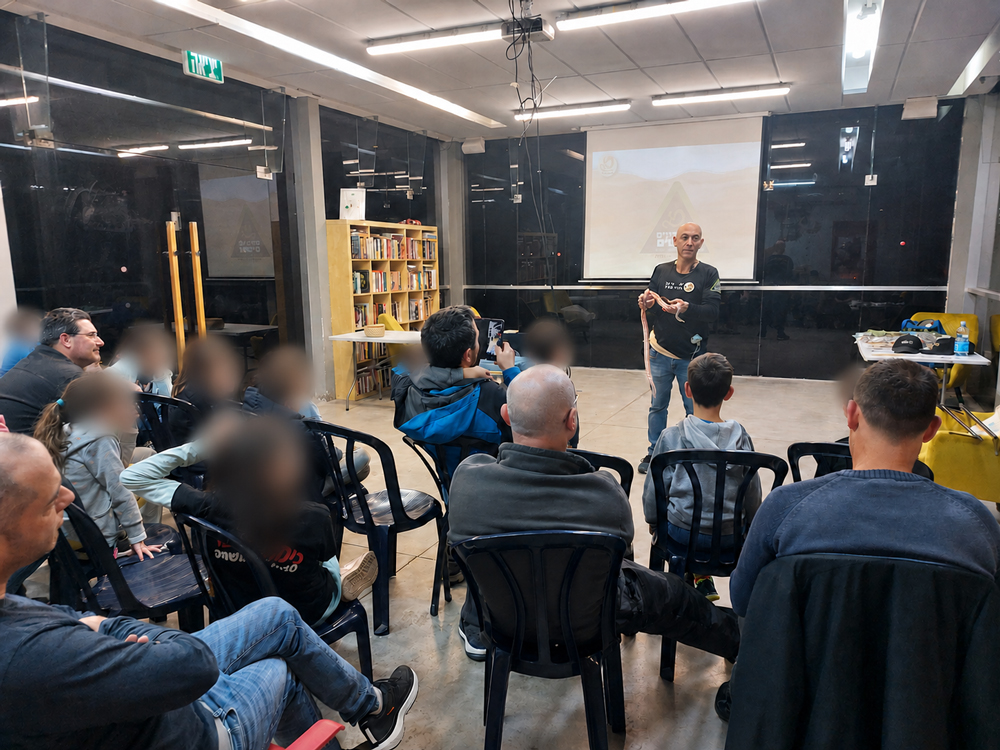
Avi instructing a category on reptiles. Picture courtesy Avi Zobel
Israel has a outstanding variety of reptiles, and a few of these animals create sturdy reactions and frequent conflicts with individuals. I felt that they wanted a stronger and extra devoted voice, each in public training and conservation. One factor that made this notably clear to me was a sample I repeatedly noticed on social media. Somebody would put up {a photograph} of a snake they’d already killed and solely then ask, “Was it venomous?” That bothered me deeply. To me, the order needs to be precisely the alternative: first cease, perceive what animal is in entrance of you and learn to reply safely — slightly than killing it out of worry or lack of know-how. This was one of many issues that led to my unique message: “Don’t Kill Snakes.” However I shortly realized {that a} slogan alone was not sufficient. For those who inform individuals to not kill a snake, you even have to offer them another: accessible info, assist with identification, steering about what to do when a snake seems close to their house, and details about whom to contact when skilled assist is required. This strategy finally led me to determine Reptiles of Israel – Shomrim Al Zochalei Ha’aretz in 2016. My objective has by no means been to make everybody love snakes. Worry is actual, and I respect it. My objective is to assist individuals perceive that worry doesn’t need to result in harming an animal. If somebody who as soon as would have killed a snake as an alternative learns to cease, hold a protected distance and name knowledgeable — and comes away understanding that these animals should not “the enemy,” however an necessary a part of the ecological system, with many additionally serving as pure organic management of different animals — then, from my perspective, we now have achieved one thing. That’s already significant change, and that’s conservation. Israel is a comparatively small nation, but it has remarkably excessive reptile variety.
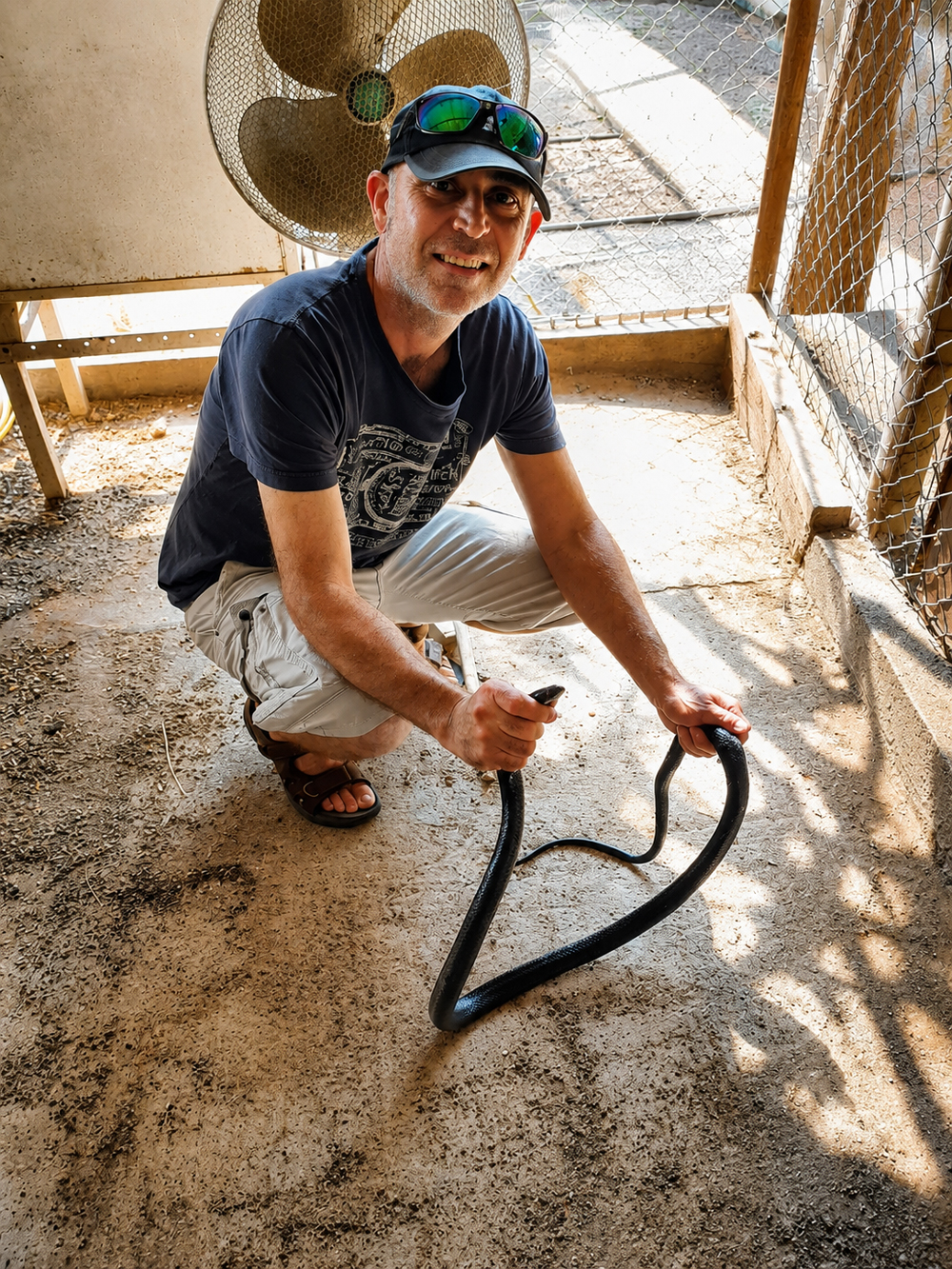
Avi is a licensed snake catcher. After catching snakes he’s referred to as out to take away, they’re launched in applicable environments. Picture courtesy Avi Zobel
Israel’s Variety in Reptiles
RM: What makes Israel such an fascinating place for herpetologists?
AZ: One of many outstanding issues about Israel is how a lot biodiversity might be discovered inside such a small space. Israel lies on the assembly level of various biogeographical and climatic areas, so inside comparatively quick distances you may transfer between very completely different habitats — from Mediterranean environments within the north and heart to the deserts of the Negev and Arava within the south. This variety is clearly mirrored in our herpetofauna. Israel has 41 species of snakes, together with 9 venomous species and one other 9 species that we confer with as rear-fanged or “sub-venomous,” in addition to 45 species of lizards, 5 species of terrestrial and freshwater turtles, and eight species of amphibians. Regardless of being a really small and densely populated nation, Israel additionally has many nature reserves and a protracted custom of analysis and efforts to guard wildlife and its habitats, together with reptiles. After all, we nonetheless face many threats and conservation challenges, however there may be additionally important analysis, consciousness and conservation work going down right here. For me, one of many biggest benefits for a herpetologist visiting Israel is the quick distances concerned. You do not want to journey a whole lot or hundreds of kilometers to maneuver between fully completely different ecosystems. Inside just some hours, you may journey from a Mediterranean setting into the desert and encounter a really completely different assemblage of reptiles and different wildlife. For a herpetologist or reptile fanatic, Israel is subsequently nearly like a concentrated model of a number of biogeographical worlds in a single place — a really small nation with a outstanding number of habitats and species, the place quick distances make it potential to expertise an distinctive variety of reptiles in a comparatively quick time.
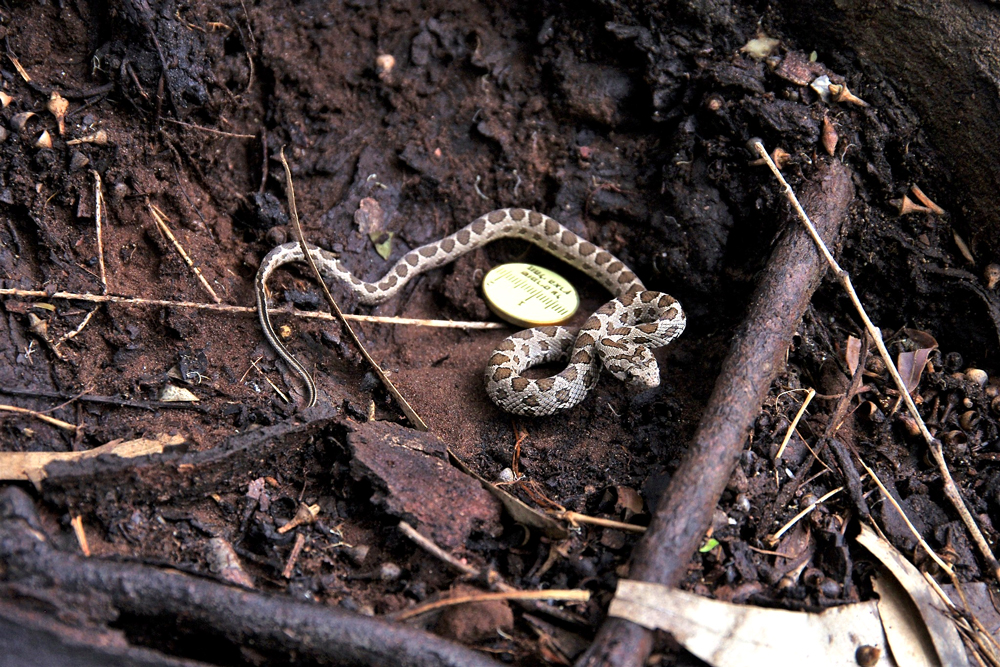
The coin-marked snake, (Hemorrhois nummifer) is of the household Colubridae and is native to the Japanese mediterranean and the Center East, together with Israel, Lebanon, Syria, Jordan, Turkey and Cyprus.
RM: What are the most important threats dealing with Israel’s native reptiles at present?
AZ: In my opinion, the best menace dealing with Israel’s native reptiles is habitat loss attributable to the fast improvement of a really small and densely populated nation. The development of recent neighborhoods, city growth, roads and infrastructure not solely destroys pure habitats straight, but in addition fragments them and disrupts the ecological corridors that permit wildlife to maneuver between pure areas. I can see this transformation by way of my very own childhood recollections. Rising up in Holon, I spent an excessive amount of time exploring the native sand dunes. In these days, it was even potential to come across the desert monitor (Varanus griseus), certainly one of Israel’s most spectacular reptiles, in these dunes. A lot of that open panorama has modified over time, and appropriate habitat for this species in central Israel has been considerably diminished. For me, this can be a very tangible instance of what occurs as improvement advances and open pure areas disappear. There’s a sure paradox right here. On one hand, Israel invests in nature reserves and wildlife conservation. Then again, it’s a small nation growing quickly, and each new highway, neighborhood or main infrastructure venture can probably cut back one other pure space or fragment the connection between wildlife populations.
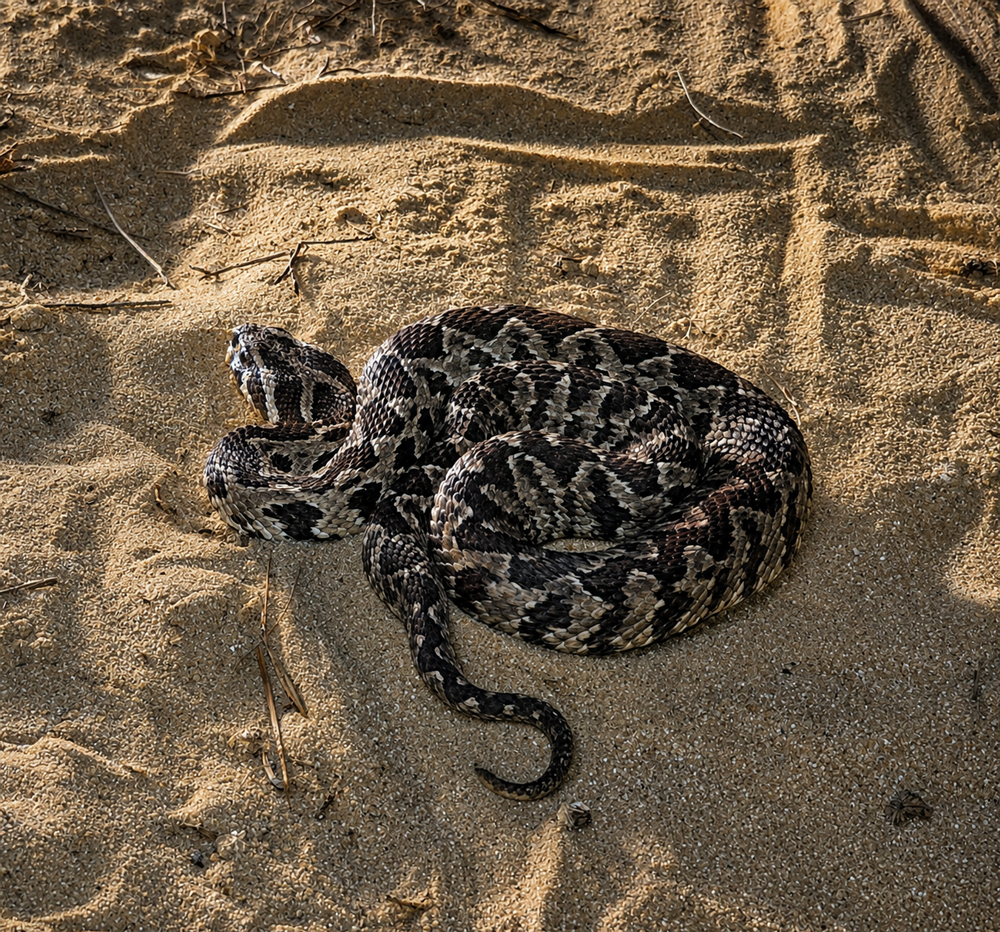
Daboia palaestinae. Avi initiated a marketing campaign to have the venomous snake named the nationwide snake of Israel. Picture by Avi Zobel
One other rising concern is invasive species. A number of non-native reptile species have already change into established in Israel, together with the brown anole (Anolis sagrei) in central Israel and the ringed wall gecko (Tarentola annularis) within the south. Invasive reptiles can compete with native species for sources and, in some circumstances, prey upon them. And naturally, there may be additionally direct human influence — from highway mortality to the intentional killing of reptiles, notably snakes, due to worry. This brings me again once more to the significance of training. We could not have the ability to cease each improvement venture, however we are able to work to guard habitats and ecological corridors, cut back pointless hurt, and on the similar time change the best way individuals reply after they encounter a reptile.
RM: A significant a part of your work entails serving to individuals coexist with snakes. What are the commonest misconceptions about Israel’s snakes that you just encounter?
AZ: There are such a lot of myths surrounding snakes that generally I really feel you would fill a set of One Thousand and One Nights with them. Individuals inform tales about snakes chasing individuals, ready for them, attacking with out motive, or behaving as if they’ve human intentions. Probably the most fundamental misconceptions is solely that “snake equals hazard,” regardless that solely 9 of Israel’s 41 snake species are venomous. On the similar time, once we are coping with a venomous snake, I don’t consider in going to the alternative excessive and pretending there isn’t any hazard. A venomous snake requires warning and a protected distance, however that doesn’t imply it must be killed. We will respect the danger whereas additionally respecting the animal. When a snake is in a scenario the place it could pose a threat to individuals, a licensed snake catcher might be referred to as to deal with the scenario safely. The misconceptions should not restricted to snakes. I encounter them with different reptiles as nicely. Throughout my lectures, for instance, I typically shock individuals by explaining that the small pinkish geckos they see operating round their houses — such because the Mediterranean home gecko (Hemidactylus turcicus) and the widespread fan-footed gecko (Ptyodactylus hasselquistii)— are literally very helpful neighbors. They prey on bugs and different arthropods, together with cockroaches and crickets.
RM: When somebody calls you as a result of they’ve a snake in or round their house, what does a typical relocation truly contain?
AZ: Once I obtain a name a few snake inside a house or a public establishment, I deal with it nearly like a medical emergency. You can not merely inform somebody, “I can are available an hour or two, simply wait.” Particularly when the species has not but been recognized, response time is essential. The very first thing I ask for, if it may be performed safely, is {a photograph} of the snake taken from a distance. There’s a main distinction between having a nonvenomous snake inside a house and a venomous one. If {a photograph} permits me to establish it as nonvenomous, I can already cut back among the anxiousness over the cellphone. After all, I at all times emphasize that no person ought to strategy or try and catch the snake simply to acquire {a photograph}. The following step is to find out the place the incident is in relation to my present location and the way shortly I can get there. I additionally consider in being clear about the price from the start. Typically individuals attempt to “get monetary savings” by coping with the snake themselves, however in doing so they could put themselves susceptible to being bitten and may hurt a protected wild animal. Israel’s native reptiles are protected wildlife, so merely killing the snake just isn’t a suitable resolution. One benefit we now have in Israel is a really giant community of licensed snake catchers unfold all through the nation. If I’m too removed from an incident and one other catcher can arrive extra shortly, we move the decision between us.
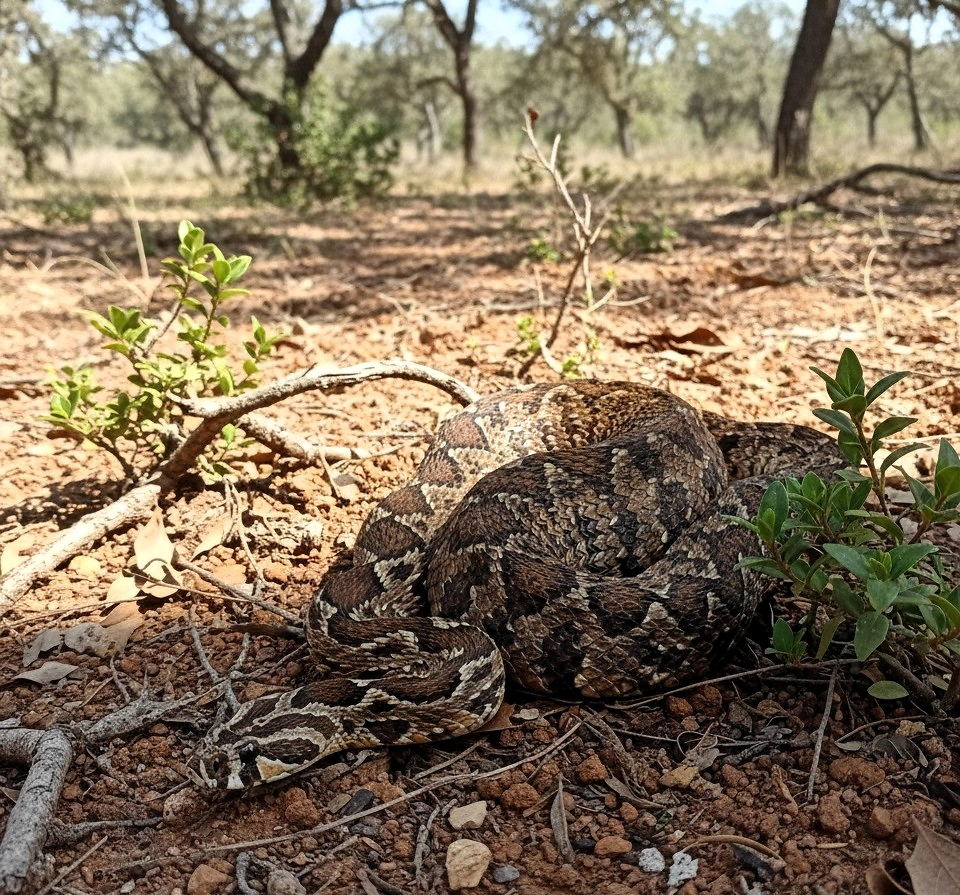
Often called the Palestine viper, Daboia palaestinae is of the household Viperidae and is native to Israel, Palestine, Lebanon, Jordan and components of Syria. It’s also answerable for a big portion of snakebites in Israel. Picture by Avi Zobel
For me, the necessary query just isn’t who will get the job, however who can get there shortly and resolve the scenario safely for each the individuals and the snake. As well as, bigger Israeli municipalities and native councils typically work with a licensed snake catcher who’s contracted to be out there to them 24/7, primarily for incidents occurring in public areas below the municipality’s accountability. So when a snake is reported in a park, avenue, public constructing or one other municipal space, there may be typically knowledgeable response out there by way of the native authority as nicely. As soon as I arrive, the search and seize itself begins. However for me, the job doesn’t finish as soon as the snake is safely contained. I attempt to use the encounter as a possibility for training — explaining which species they encountered, why it could have appeared there, what they will do to cut back related encounters sooner or later, and the way they need to reply in the event that they see one other snake. One snake name can change into a small circle of training.
The Palestine Viper as Israel’s Nationwide Snake
RM: Israel chosen Daboia palaestinae as its nationwide snake. Has that recognition truly modified the best way Israelis understand snakes? Do individuals in Israel expertise snake bites like in another areas of the world or are bites much less prevalent?
AZ: Israel has a number of animals which were chosen as nationwide representatives — for instance, the hoopoe is our nationwide hen. In my opinion, the aim of choosing an animal as a nationwide consultant of a selected group just isn’t merely to offer it a title. The objective is to boost consciousness of all the group. When individuals change into , learn, be taught and change into extra accustomed to an animal, there’s a larger probability that they may respect it and be much less more likely to hurt it. That was my considering after I initiated the marketing campaign to pick out Israel’s nationwide snake in 2018. After a sequence of posts wherein I launched the general public to Israel’s 41 snake species, we opened a public vote to pick out the nationwide snake. The voting happened each by way of the Reptiles of Israel social media channels and on Ynet, certainly one of Israel’s main information web sites. The initiative obtained assist from the Israel Nature and Parks Authority, the Society for the Safety of Nature in Israel, zoos and different organizations.
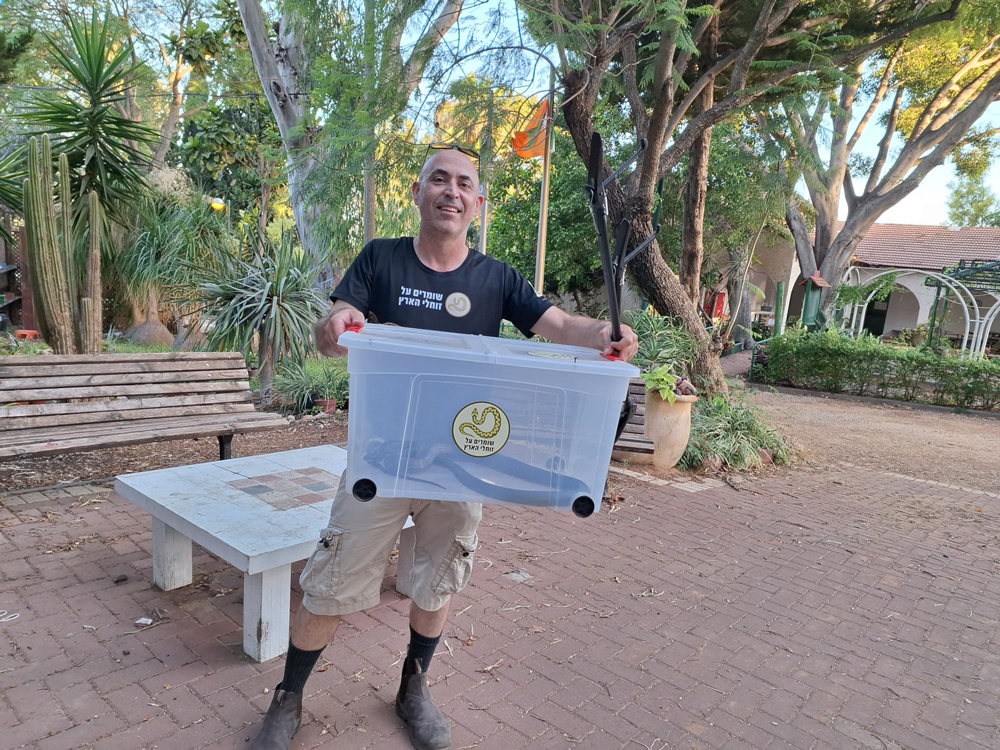
Avi with a captured snake for relocation. Picture courtesy Avi Zobel
On the finish of the method, the general public chosen Daboia palaestinae as Israel’s nationwide snake. In my opinion, it was a really logical selection. Daboia palaestinae is certainly one of Israel’s best-known and most widespread snakes. It’s a giant, spectacular and extremely venomous species, occurring throughout a lot of Israel, roughly from the Beersheba area northward to the Golan Heights. It’s also a regional species with a comparatively restricted world distribution, occurring in Israel and components of neighboring international locations. For these causes, I believe it makes a really applicable nationwide consultant. Did the choice change the best way all Israelis understand snakes? After all not. That sort of change doesn’t occur due to a single public vote. Nevertheless it did obtain one thing necessary: for a time period, individuals have been speaking about snakes not solely within the context of worry and snakebite, but in addition out of curiosity, studying in regards to the completely different species that reside right here, and selecting a nationwide wildlife image. I additionally assume there was one thing significant in regards to the public selecting a venomous and probably harmful snake. We will acknowledge that an animal presents a threat, deal with it with applicable warning, and on the similar time perceive its significance and wish to defend it.
Relating to snakebites, in accordance with knowledge I’ve obtained up to now from Israel’s Ministry of Well being, roughly 300 to 400 circumstances of snakebite or snake-related bites are evacuated to hospitals annually, whereas the variety of fatalities may be very low — often 0–2 deaths per 12 months. Israel has an necessary benefit on this respect. We’re a really small nation with many hospitals positioned inside comparatively quick distances. Within the occasion of a snakebite, it’s typically potential to succeed in medical therapy comparatively shortly. Israel additionally has a particular antivenom for Daboia palaestinae, which is answerable for a big proportion of the medically important snakebites within the nation.
Antivenom can be out there for the painted saw-scaled viper (Echis coloratus). Particular antivenoms should not produced for each different venomous snake species in Israel, partly as a result of bites from a few of these species are extraordinarily uncommon, making the manufacturing and upkeep of a devoted antivenom for every species neither sensible nor economically justified. The mix of quick distances, comparatively fast entry to hospitals, medical expertise, and antivenoms for probably the most related species might be one of many explanation why, regardless of a whole lot of snakebite and snake-related chunk circumstances being evacuated to hospitals annually, the variety of fatalities in Israel stays very low.
RM: After working with Israel’s reptiles for so long as you have got, is there a species—or a selected encounter—that has modified the best way you consider reptiles?
AZ: There may be one encounter that I nonetheless keep in mind clearly from my childhood, lengthy earlier than I grew to become a licensed snake catcher and lengthy earlier than I based Reptiles of Israel. I grew up in Holon, and as a toddler I spent many hours exploring the sand dunes close to my house. Throughout a kind of outings, I discovered a younger Montpellier snake (Malpolon monspessulanus) that had change into trapped in a discarded can. The snake had managed to push its head by way of a slim opening within the can however couldn’t free itself. The Montpellier snake is a big and spectacular species, however sadly it is usually continuously discovered killed on roads in Israel. Amongst Israeli reptile lovers, it’s generally referred to, with a combination of humor and unhappiness, as “the nationwide roadkill.” I keep in mind attempting to assist it. I rigorously opened the can, freed the snake and launched it again into the dunes. It might sound like a small occasion, however it stayed with me for a few years. Trying again, I believe one thing was already there that has remained with me ever since.
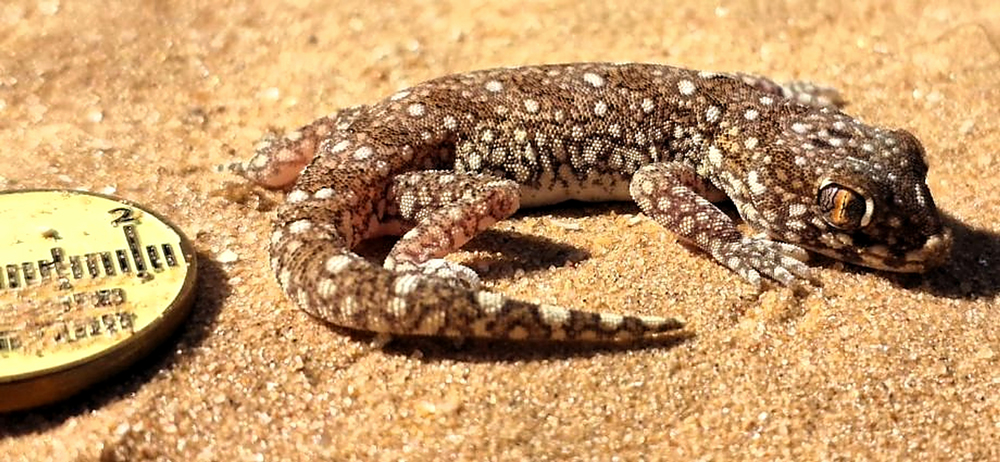
The straw-colored gecko (Stenodactylus sthenodactylus) can be referred to as the Egyptian sand gecko or dune gecko. It’s present in a lot of the Center East and North Africa. It’s a nocturnal species that hunts bugs and small arthropods. Its toes are tailored to sand and it will possibly transfer shortly throughout free substrate. Picture by Avi Zobel
Once I encounter an animal that many individuals are afraid of, my first response just isn’t to consider the right way to do away with it or hurt it, however how I can assist it. That have additionally taught me one thing else: generally the menace to reptiles just isn’t an individual intentionally attempting to kill them. Even a discarded can might change into a entice for wildlife. We have an effect on the animals round us even when we don’t intend to. Greater than 30 years later, I nonetheless encounter snakes and different reptiles nearly day-after-day — within the area, throughout snake calls, in lectures and thru my academic work. However in some methods, that little one within the dunes attempting to free a small snake from a can remains to be an enormous a part of what I do at present. For me, conservation begins in precisely these small moments: seeing an animal, understanding that it additionally has a spot right here, and selecting to assist it slightly than hurt it.
RM: Are there reptiles in Israel that you just consider are poorly understood or deserve significantly extra scientific consideration?
AZ: I should not have a favourite reptile species. For me, a big a part of what makes this area so fascinating is the range itself. After all, it’s at all times thrilling to come across a uncommon species, and amongst area lovers we generally use the time period “lifer” for a species we encounter for the primary time. There are species you may spend days looking for within the area and nonetheless not discover. However for precisely that motive, I additionally consider there may be nice worth in finding out the extra widespread species, notably people who we continuously encounter near individuals. As a part of my work, I obtain and analyze nationwide knowledge on snake captures yearly. Trying on the knowledge over time, sure species seem repeatedly in encounters with individuals. Among the many most distinguished are the Palestine viper (Daboia palaestinae), the coin-marked snake (Hemorrhois nummifer), black whipsnake (Dolichophis jugularis), olive racer (Platyceps najadum), javelin sand boa (Eryx jaculus), and cube snake (Natrix tessellata).
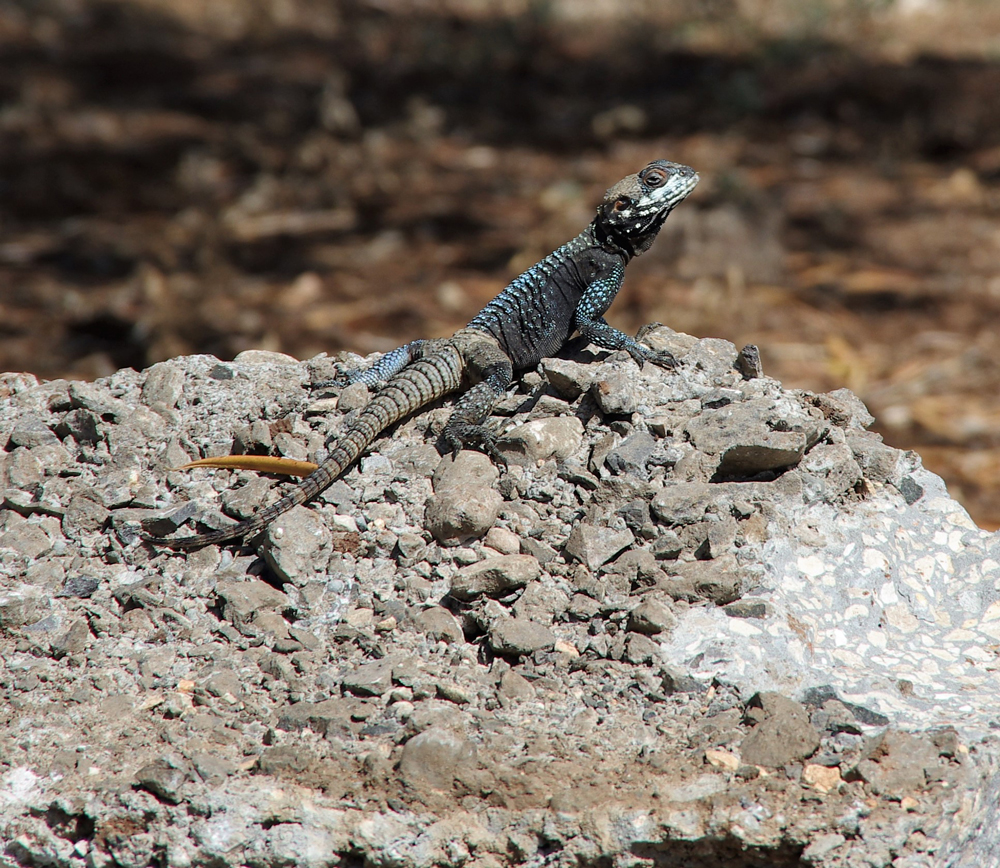
The starred agama (Stellagama stellio) lives in rocky hillsides, cliffs, stone partitions, and rocky terrain. It’s diurnal and basks typically on rocks.It’s native to The Japanese mediterranean and Center East, together with Israel, Palestine, Jordan, Lebanon, Syria, Cyprus, and Turkey. Picture by Avi Zobel
To me, these knowledge increase some very fascinating analysis questions. What permits sure species to adapt extra efficiently to human environments? What traits of neighborhoods, gardens, agricultural areas and infrastructure appeal to them? How do building and improvement have an effect on their motion patterns? And may we establish upfront the locations or seasons wherein encounters between individuals and snakes usually tend to happen? I consider there may be appreciable worth in combining educational analysis with area knowledge and citizen science. Hundreds of seize data and stories from the general public, when analyzed correctly, can present a broad image of the place and when snakes and folks encounter each other. For me, this isn’t solely about finding out snakes. The higher we perceive why these species enter human environments and the way they use a altering panorama, the higher we are able to cut back probably harmful encounters, present the general public with extra correct info, and discover higher methods to coexist with these reptiles slightly than hurt them. So, alongside the scientific significance of finding out uncommon species, I want to see significantly extra consideration given to the species we encounter repeatedly near our houses — and to the interface between reptiles and human environments.
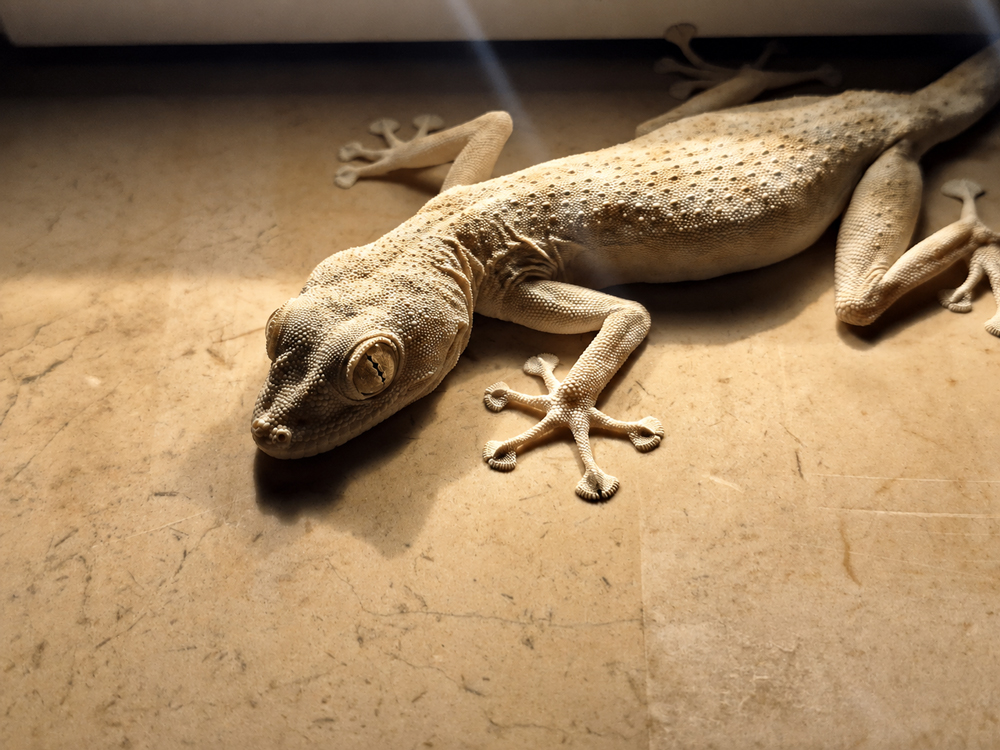
The noticed fan-footed gecko’s toe pads assist it to stick to many forms of surfaces. Picture by Avi Zobel
Public Schooling and Reptile Conservation
RM: How necessary is public training to reptile conservation, and what approaches have you ever discovered truly change individuals’s attitudes towards snakes and lizards?
AZ: For me, training and public outreach are maybe a very powerful instruments in reptile conservation. The truth is, nearly each encounter I’ve with somebody turns into, not directly, a small public relations alternative for reptiles — with out overdoing it, after all, and at all times adapting the dialog to the particular person in entrance of me. Typically one sentence or one fascinating reality is sufficient to make somebody look in a different way at an animal that, solely moments earlier, precipitated worry or disgust. I additionally hold reptiles at house — non-native species, not Israeli wildlife — and when individuals uncover this, they nearly at all times wish to see them. For me, this creates a wonderful alternative. Curiosity is usually step one towards altering an angle. An individual who begins by asking, “Can I see them?” is already in a distinct place from somebody whose first response is, “That’s disgusting.” I strongly consider within the energy of steady constructive publicity and communication about these animals. If we speak extra about reptiles, present them, clarify their habits, their ecological significance and what makes them fascinating, then steadily extra individuals can transfer from worry, rejection and disgust towards curiosity, curiosity and even a need to guard them. This doesn’t occur in a single day, which is why I see it as ongoing work. However a very powerful viewers for this type of change is kids. Youngsters come to us, to a big extent, like a clean web page. Lots of the fears and damaging reactions towards snakes and different reptiles are issues they later soak up from the adults round them. So after I work with kids, I attempt to give them a distinct expertise from the start — curiosity as an alternative of disgust, data as an alternative of myths, and respect for the animal as an alternative of a need to hurt it. What’s fascinating is that the affect may work in the other way. We often consider dad and mom as those educating their kids, however on this area I typically see change coming from the underside up. A baby who comes house excited and talks a few snake, lizard or gecko they realized about can generally make a dad or mum cease and rethink their very own angle. I don’t count on to show everybody right into a snake lover. That’s not my objective. For me, if somebody strikes from “That’s disgusting, kill it” to “Wait, what’s it? What ought to we do?” — then a significant change has already taken place. Finally, familiarity can cut back worry, data permits individuals to make higher selections, and conservation generally begins with the easy determination to not hurt.
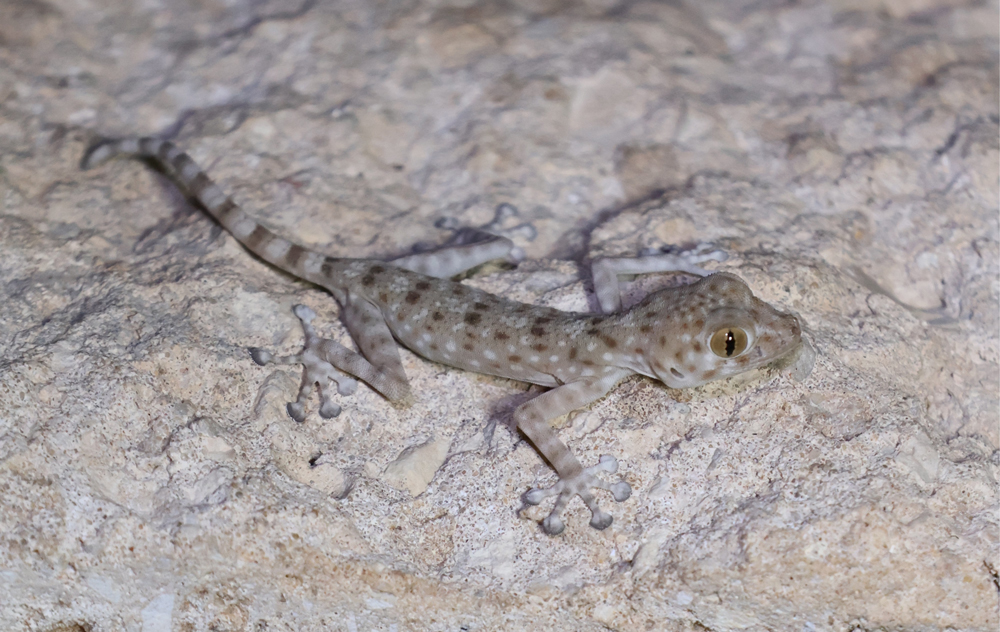
Ptyodactylus guttatus, the noticed fan-footed gecko’s native vary contains Israel, Palestine, Jordan, Lebanon, Syria and different components of the Center East. It grows to about 4-6 inches together with the tail and is primarily nocturnal.
RM: For those who might change one factor about the best way individuals in Israel work together with reptiles over the following 10 years, what would you need that change to be?
AZ: Initially, I’d hope that 10 years from now, nature in Israel will probably be below much less strain, and that we are going to be extra profitable in defending our open areas and the habitats of our wildlife. But when I had to decide on one change in the best way individuals relate to reptiles, I want to see extra respect and fewer worry. I would love individuals to grasp that reptiles are an necessary a part of the ecosystem, and that many species additionally present necessary pure organic pest management. My dream is definitely even easier: I want to see a day when somebody encounters a snake and reacts nearly as they’d in the event that they encountered a lizard or a turtle. They’d cease, observe it, hold a protected distance when essential, and transfer on — with out the encounter instantly being accompanied by screams of worry and a need to kill the animal. After all, I don’t count on individuals to disregard the hazard when a venomous snake is concerned. Individuals ought to acknowledge the potential threat, hold a protected distance and name knowledgeable when essential. However worry and warning should not have to change into hatred or a need to destroy the animal. I do know we nonetheless have a protracted method to go. Attitudes and fears which can be handed from one technology to a different don’t change in a single day. However I may see that change is already starting — by way of kids, lectures, encounters with the general public, social media, and each one who, the following time they see a snake, chooses to cease earlier than harming it. It’s work that occurs slowly, brick by brick. And if, 10 years from now, extra individuals in Israel have a look at a snake in the beginning as a wild animal that has a spot in nature, slightly than as an enemy that must be destroyed, I’d take into account {that a} great achievement.
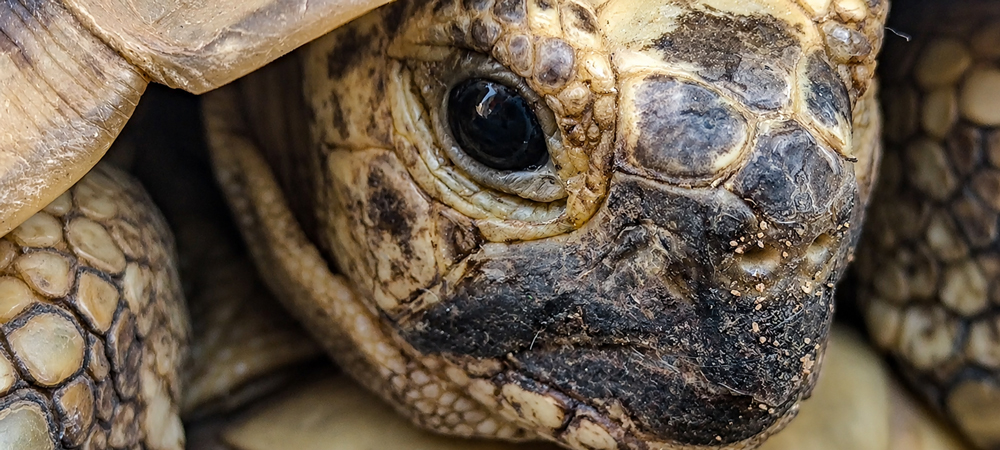
The greek tortoise (Testudo graeca) has a spread that features North Africa, southern Europe into Turkey, the Center East and components of Central Asia. It has a shell size of 15-25cm or 6 to 10 inches in carapace size and is primarily herbivorous. Picture by Avi Zobel
RM: What’s one thing about Israel’s reptiles that you just assume the worldwide reptile group doesn’t perceive?
AZ: I believe individuals exterior Israel don’t at all times notice simply how numerous and engaging this small nation is when it comes to wildlife, notably reptiles. Probably the most fascinating issues about Israel is that many species happen right here on the fringe of their world distribution. Israel lies on the assembly level of a number of completely different biogeographical areas, so inside a really small space you’ll find species whose principal ranges prolong into very completely different components of the world. For anybody desirous about zoogeography and in how animals disperse and adapt to completely different habitats, this makes Israel a very fascinating place. Even after many years of analysis, new and shocking discoveries are nonetheless being made right here. One in every of my favourite examples from Israeli wildlife is definitely an amphibian—the Hula painted frog (Latonia nigriventer). For many years, it was thought-about extinct till it was rediscovered within the Hula Nature Reserve in 2011. Additional analysis revealed one thing much more outstanding: it’s the solely residing consultant of an historical genus that had beforehand been recognized primarily from fossils. To me, a narrative like this reminds us how a lot there may be nonetheless to be taught, even in a rustic as tiny, densely populated and extensively studied as Israel. So, if there may be one factor I would love the worldwide reptile group to grasp about Israel, it’s this: don’t let its measurement idiot you. Inside a really small space there may be a rare variety of habitats and species, a lot of them residing right here on the fringe of their geographic vary — and even at present, Israel’s wildlife can nonetheless shock us.

