


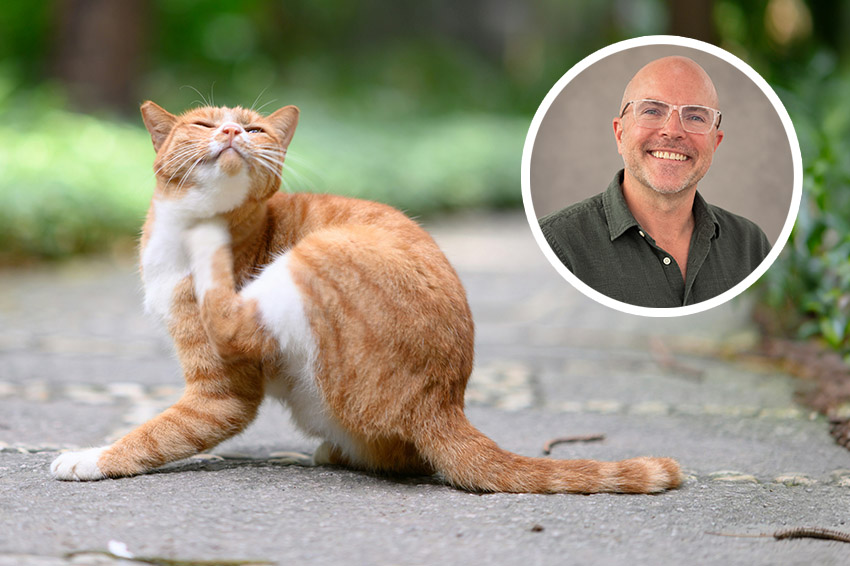
Dr Richard Gowan, Senior Veterinarian and Clinic Director at The Cat Docs, reviewed this text to assist guarantee pet homeowners obtain correct, up-to-date veterinary info.
Cats are well-known for holding themselves meticulously clear, so seeing your cat licking, grooming, or scratching could not instantly set off alarm bells. However when grooming turns into fixed, bald patches seem, or their pores and skin seems to be crimson and irritated, it might sign that one thing isn’t fairly proper.
Allergy symptoms might be notably difficult to recognise in cats as a result of the indicators aren’t all the time apparent, and what seems to be like atypical grooming or perhaps a behavioural problem may very well be a response to persistent itchiness.
Pet Insurance coverage Australia caught up with Dr Richard Gowan, Senior Veterinarian and Clinic Director at The Cat Docs, about what cat allergic reactions can appear like, the frequent triggers behind itchy pores and skin and when it’s time to get your vet concerned.
30-Second Reply
Is your cat licking, scratching or dropping hair? If grooming causes bald patches, damaged hairs, redness, scabs, or pores and skin lesions, don’t dismiss it as regular grooming.
Fleas are a very frequent wrongdoer, and also you don’t have to see fleas for them to be accountable. Different doable triggers embody environmental allergens, meals and pores and skin situations that may produce very related signs.
As a result of no single check diagnoses allergic reactions in cats, a veterinarian ought to examine recurring or persistent signs to establish the underlying trigger.
Can Cats Get Seasonal Allergy symptoms?
Sure. Cats can develop allergic reactions to most of the similar environmental allergens that have an effect on folks, together with grass and tree pollens, mould spores and mud mites.
Nonetheless, feline allergic reactions don’t essentially observe a predictable spring sample.
Dr Richard Gowan, Senior Veterinarian and Clinic Director at The Cat Physician, explains that cats could have one main set off or a number of contributing allergens. Mud mites and dietary allergens, for instance, could cause year-round publicity, whereas pollen and flea publicity could enhance seasonally.
Signs can due to this fact persist year-round however worsen when a cat’s general allergen publicity will increase.
Climate also can affect when environmental allergens grow to be problematic, so symptom severity and timing can differ from 12 months to 12 months.
Fleas Can Be a Main Reason behind Itchy Pores and skin in Cats
Hotter climate also can imply extra fleas, and for a cat with flea allergy dermatitis (FAD), it doesn’t take a serious infestation to trigger issues.
“Some cats might be enormously delicate to the flea chunk and related saliva,” Dr Gowan warns. “This may set off intense allergic sensitivities that may persist for days to weeks. A extremely delicate cat can develop vital itching and irritation following solely a few flea bites.”
Importantly, not seeing fleas doesn’t rule them out.
Cats are exceptionally environment friendly groomers and should lick or chunk fleas from their coats earlier than an proprietor, or perhaps a veterinarian, can see. Flea dust, which is actually dried blood handed by fleas, could typically be seen across the base of the coat.
Indoor cats shouldn’t mechanically be thought of secure from flea publicity both.
For prone cats, constant year-round flea prevention might be essential. Each appropriate pet within the family can also want applicable safety to assist break the flea life cycle inside the house.
Your veterinarian can advocate a flea preventative applicable to your particular person cat.
What Does an Itchy Cat Look Like?
One of many greatest challenges with feline allergic reactions is recognising the itch. Canine could clearly scratch. Cats are naturally meticulous groomers, making extreme licking a lot simpler to miss.
“Typically the very first thing an proprietor notices is that the coat is turning into barely bald, notably over the stomach, interior thighs or hind legs.”
Repeated licking with a cat’s tough, spiny tongue also can break the hair shafts fairly than creating fully bald pores and skin.
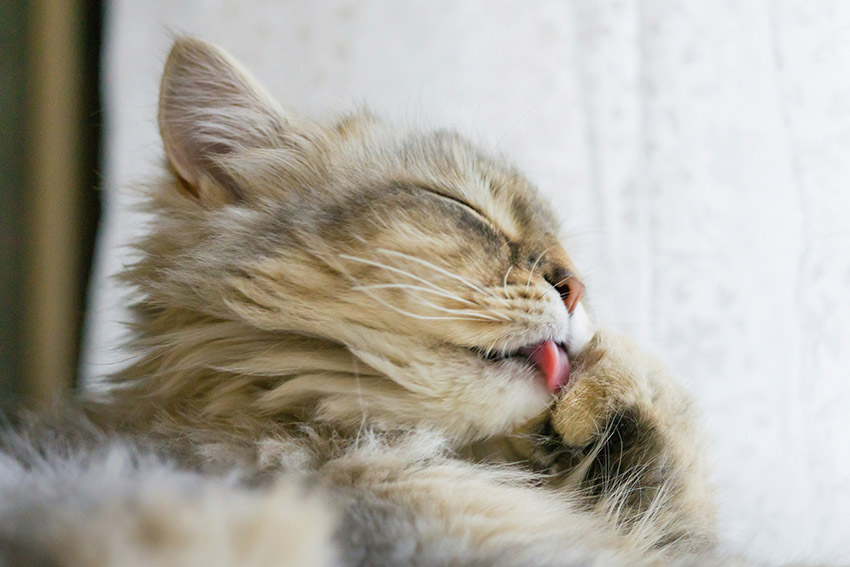
Indicators your cat could also be itchy embody:
- Elevated licking or grooming
- Thinning fur or bald patches
- Damaged hairs
- Extreme licking of the stomach, interior thighs or hind legs
- Scratching or rubbing across the head and neck
- Purple or irritated pores and skin
- Small scabs or crusts
- Elevated ear discharge
- Restlessness or agitation
As Dr Gowan explains:
“A helpful rule is that if grooming is inflicting seen hair loss, damaged hairs, redness or pores and skin lesions, it shouldn’t be thought of regular grooming.”
When Ought to You Take an Itchy Cat to the Vet?
If overgrooming or scratching causes seen hair loss, redness, sores, scabs, or ear issues, it’s time to have your cat examined. Recurring issues additionally warrant investigation fairly than repeatedly ready for them to settle.
Veterinary consideration must be sought sooner should you discover:
- Moist or weeping pores and skin wounds
- Open sores
- Vital crusting
- Repeated scratching or trauma across the face and neck
- Indicators of ache
- Extreme or persistent ear issues
- A cat that seems distressed, agitated or unable to settle due to the itch
Moist wounds can point out a secondary an infection, which can even be painful.
How Do Vets Diagnose Allergy symptoms in Cats?
Sadly, no single check can inform a veterinarian precisely what a cat is allergic to.
“Cat dermatology can all look the identical; there may be not one check that claims allergy.”
Prognosis is due to this fact normally a means of systematically investigating and excluding different doable causes.
A veterinarian could think about the placement and look of the pores and skin lesions alongside the cat’s food regimen, way of life, parasite prevention, earlier medical historical past and different animals residing within the family.
Infectious and parasitic situations, together with ringworm, additionally should be thought of.
May it’s a meals allergy?
If a meals allergy is suspected, a veterinarian could advocate a correctly managed elimination food regimen utilizing an applicable novel or hydrolysed protein food regimen.
This isn’t merely a matter of switching cat-food manufacturers for every week or two. A diagnostic meals trial can require months of diligent administration and could also be adopted by a dietary problem the place applicable.
Whereas blood checks marketed for meals allergic reactions can be found, Dr Gowan says their validity and usefulness are questionable.
May it’s an environmental allergy?
Environmental allergy in cats is usually known as feline atopic pores and skin syndrome.
Veterinarians typically diagnose it after investigating and excluding different seemingly causes of the cat’s signs.
Allergy testing could typically be helpful when a veterinarian is planning allergen-specific immunotherapy, however it isn’t a stand-alone check that proves a cat has an environmental allergy.
How Are Cat Allergy symptoms Handled?
Therapy will depend on what’s inflicting the response and the way severely the cat is affected.
Administration could contain:
- Complete parasite management
- Treating secondary pores and skin infections
- Dietary modifications or an elimination food regimen
- Medicine to cut back itching and irritation
- Decreasing publicity to contributing allergens the place doable
- Longer-term administration for cats with persistent environmental allergic reactions
- Allergen-specific immunotherapy in chosen circumstances
Some cats expertise recurring allergy issues all through their lives, so good long-term administration is more practical than treating particular person flare-ups as they happen.
Is My Cat Overgrooming Due to Stress or Allergy symptoms?
It may very well be both…and typically each.
One of the vital essential misconceptions Dr Gowan encounters is the idea that extreme grooming is just behavioural.
“Stress, nervousness and behavioural components can definitely exacerbate fastidious grooming behaviour, however itchiness and underlying pores and skin illness should be excluded earlier than assuming that overgrooming is only behavioural.”
There can be an overlap between allergic pores and skin illness and nervousness, which might make some circumstances tougher to handle.
The identical warning applies to fleas. Not discovering one crawling via your cat’s coat doesn’t imply you may mechanically cross flea allergy off the listing.
“So if a cat is persistently licking, scratching or dropping hair, it’s value pondering of that behaviour as a possible signal of discomfort fairly than merely a grooming behavior. Discovering and managing the underlying trigger is far more efficient than treating every flare-up in isolation.”
Cat Allergy FAQs
What are cats generally allergic to?
Frequent triggers can embody fleas, grass and tree pollens, mould spores, mud mites and sure meals. Some cats have one main set off, whereas others react to a number of.
Can indoor cats get flea allergy dermatitis?
Sure. Indoor residing doesn’t fully eradicate the potential of flea publicity. Cats are additionally very efficient at grooming fleas from their coats, which means homeowners could by no means really see one.
Can one flea chunk trigger an allergic response in a cat?
A extremely flea-allergic cat can develop vital itching and irritation following solely minimal publicity. Reactions can persist for days or perhaps weeks.
Why is my cat licking its stomach bald?
Persistent licking of the stomach, interior thighs and hind legs generally is a signal of itchiness. Allergy symptoms, parasites, pores and skin illness, and behavioural components are among the many doable causes, so a veterinarian ought to examine seen or recurring hair loss.
How do I do know if my cat is grooming an excessive amount of?
If grooming ends in thinning fur, bald patches, damaged hairs, redness, scabs, or different pores and skin lesions, it ought to not be thought of regular grooming.
Can stress trigger cats to overgroom?
Sure, stress and nervousness can contribute to extreme grooming. Nonetheless, examine underlying itchiness and pores and skin illness earlier than assuming overgrooming is only behavioural.
Is there an allergy check for cats?
There isn’t any single check that diagnoses all feline allergic reactions. Prognosis sometimes entails investigating and excluding different causes. Allergy testing may also help in chosen circumstances, notably when planning allergen-specific immunotherapy.

Professional contributor:
Dr Richard Gowan
Senior Veterinarian, Clinic Director
BVSc (Hons), Feline Drugs (MACVSc)
The Cat Physician
http://catdoctor.com.au
This text supplies common info solely and isn’t an alternative to veterinary recommendation. In case your cat is experiencing persistent itching, hair loss, pores and skin lesions or different regarding signs, converse together with your veterinarian.
Submit Views: 8

Nadia Crighton is a famend and completed skilled within the fields of Journalism, Public Relations, and Writing, with an in depth profession spanning over 25 years, 20 of which have been devoted to selling the well being and well-being of pets.

